
HVAC replacement costs $5,000 to $12,500 on average for a central system in 2026, with most whole-home replacements landing between $7,000 and $10,000. A new central air conditioner alone runs $3,500 to $7,500. A furnace replacement costs $2,500 to $6,000. Mini-split systems run $3,000 to $5,000 per zone. SEER rating, system size (tonnage), and home square footage are the biggest cost drivers.
Key Takeaways
- Full HVAC system replacement costs $5,000 to $12,500 on average in 2026, or up to $20,000 or more for large homes or premium systems.
- A new central AC unit alone runs $3,500 to $7,500. A furnace runs $2,500 to $6,000. A heat pump runs $4,000 to $10,000.
- Higher SEER ratings cost more upfront but reduce monthly energy bills. The 2026 minimum SEER rating is now 14 to 15 in most regions.
- Labor is 30% to 40% of the total HVAC replacement cost.
- Ductwork repair or replacement adds $1,000 to $5,000 or more if the existing ducts are leaking, damaged, or improperly sized.
- Tax credits and utility rebates for high-efficiency systems can reduce the net cost by $500 to $2,000 or more in 2026.
Table of Contents
- Average Cost and National Benchmarks
- Cost by System Type
- Cost by Home Size
- SEER Ratings and Efficiency
- Ductwork and Hidden Costs
- Rebates and Tax Credits
- How to Budget and Plan
- Frequently Asked Questions
- Final Word
Average Cost and National Benchmarks
HVAC replacement costs $5,000 to $12,500 on average for a central system in 2026, with most whole-home replacements landing between $7,000 and $10,000, according to Angi and HomeAdvisor cost data. The full HVAC system cost includes the equipment, refrigerant, labor, and any ductwork modifications needed.
The HVAC installation cost and replace HVAC cost both vary more by system type and home size than by any other factor. The ACCA sets the industry standards for how these systems are sized and installed. A small 1,500 square foot home needs a smaller-capacity system than a 3,000 square foot home, and a simple forced-air system costs less than a zoned mini-split or a geothermal heat pump.
Here is an overview of average costs for the most common scenarios:
| Scenario | Typical Cost Range | Average Cost |
| Central AC unit only | $3,500 to $7,500 | $5,000 |
| Furnace only (gas) | $2,500 to $6,000 | $3,800 |
| Central AC + furnace | $5,000 to $12,500 | $8,000 |
| Heat pump (single zone) | $4,000 to $10,000 | $6,500 |
| Mini-split (per zone) | $3,000 to $5,000 | $4,000 |
| Whole-home mini-split (3 to 4 zones) | $8,000 to $20,000 | $13,000 |
| Geothermal heat pump | $15,000 to $30,000 | $22,000 |
For the broader renovation context, see our pillar on how much a home renovation costs.
Cost by System Type
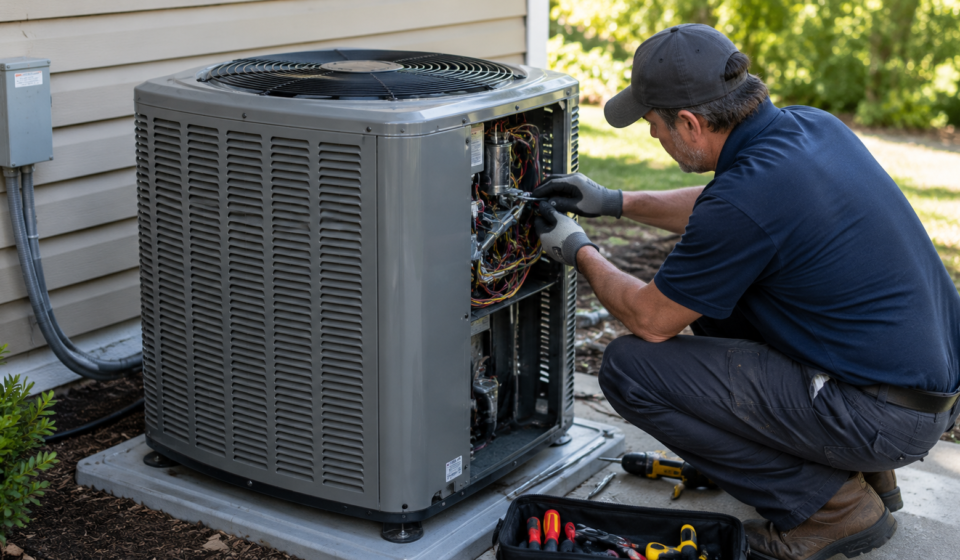
Central air conditioner: A new central air conditioner (the outdoor condensing unit and indoor air handler or coil) costs $3,500 to $7,500 installed. The outdoor unit handles the refrigerant cycle while the indoor unit distributes cooled air through existing ductwork. This is the most common replacement in warm climates where heating is handled by a separate furnace.
Furnace: A gas furnace replacement costs $2,500 to $6,000 installed. Oil furnaces run slightly higher at $3,000 to $7,000. The furnace replacement cost includes removing the old unit, installing the new one, connecting gas or oil supply, flue, and electrical. Modern high-efficiency furnaces achieve 95% to 98% AFUE (annual fuel utilization efficiency), compared to 60% to 70% for older units.
Heat pump: A heat pump handles both heating and cooling in one system, making it an efficient choice for mild to moderate climates. Air-source heat pumps cost $4,000 to $10,000 installed. They are more energy-efficient than a separate AC plus furnace combination in moderate climates and qualify for significant federal tax credits in 2026.
Mini-split system: Mini-splits do not require ductwork, making them ideal for additions, conversions, or homes without existing ducts. They function as a zoned system, with each zone’s indoor unit connected to the outdoor compressor. Per-zone cost runs $3,000 to $5,000 installed. A whole-home mini-split with 3 to 4 zones costs $8,000 to $20,000.
Geothermal heat pump: The most energy-efficient option, using the stable temperature of the earth to heat and cool. Geothermal systems cost $15,000 to $30,000 installed but reduce energy bills by 25% to 50%. They also qualify for a 30% federal tax credit in 2026 and provide strong resale value in energy-conscious markets. The payback period is 5 to 15 years depending on energy costs and usage.
Cost by Home Size
HVAC systems are sized in tons of cooling capacity, where one ton equals 12,000 BTU per hour. A rough rule of thumb is 400 to 600 square feet per ton, though climate, insulation, and window area all affect the calculation.
| Home Size | System Size | Approximate New HVAC Cost |
| Under 1,000 sq ft | 1.5 to 2 tons | $4,000 to $7,000 |
| 1,000 to 1,500 sq ft | 2 to 2.5 tons | $5,000 to $8,500 |
| 1,500 to 2,000 sq ft | 2.5 to 3 tons | $6,000 to $10,000 |
| 2,000 to 2,500 sq ft | 3 to 3.5 tons | $7,000 to $11,500 |
| 2,500 to 3,000 sq ft | 3.5 to 4 tons | $8,000 to $13,000 |
| Over 3,000 sq ft | 4 to 5 tons | $10,000 to $20,000+ |
An HVAC contractor should always perform a Manual J load calculation to properly size the system for your home before installation. An oversized system cycles on and off too frequently, causing humidity problems and shorter equipment life. An undersized system runs constantly and cannot maintain comfort in extreme weather.
SEER Ratings and Efficiency
SEER (Seasonal Energy Efficiency Ratio) measures air conditioner efficiency. Higher SEER ratings mean lower energy bills but higher upfront equipment cost. As of January 2026, the US Department of Energy’s minimum SEER ratings increased to SEER2 14 in the North and SEER2 15 in the South and Southwest.
| SEER Rating | Upfront Cost Premium | Annual Energy Saving vs SEER 14 |
| SEER 14 to 15 | Baseline | Baseline |
| SEER 16 to 17 | +$200 to $500 | 10% to 15% less |
| SEER 18 to 20 | +$500 to $1,200 | 20% to 30% less |
| SEER 21 to 25 | +$1,200 to $3,000 | 30% to 45% less |
A SEER 20 system costs roughly $800 to $1,500 more than a SEER 14 baseline unit. In a climate that runs air conditioning for 6 months a year, that premium pays back in 4 to 7 years through reduced energy bills. Higher SEER systems also qualify for larger utility rebates and federal tax credits.
Ductwork and Hidden Costs
Ductwork is the most common hidden cost in an HVAC replacement. Many older duct systems have significant leakage, loose connections, or sections that are improperly sized for the new, more efficient equipment. Installing a high-efficiency system on leaky ductwork reduces its effectiveness and can void warranties.
Duct sealing costs $300 to $1,000 for a standard home and is one of the best-value HVAC investments available. Ductwork replacement in an attic or crawl space, where ducts are accessible, costs $1,000 to $4,000. Full duct replacement in a finished home, where walls and ceilings must be opened, costs $5,000 to $15,000 or more.
Other hidden costs include refrigerant disposal for old R-22 systems (refrigerant phase-out made R-22 scarce and expensive to service), electrical panel upgrades if the new equipment requires more amperage than the existing panel provides, and permit fees. HVAC permits run $150 to $600 in most jurisdictions and are required in virtually all states.
These are part of the broader category of hidden costs our guide to the hidden costs of hiring a contractor covers. Always ask HVAC contractors for a scope of work that explicitly includes or excludes ductwork, refrigerant, and permit fees.
Rebates and Tax Credits
2026 is a strong year for HVAC efficiency incentives. The Inflation Reduction Act provides a 30% federal tax credit (up to $600 for a new AC or heat pump) for qualifying high-efficiency equipment. Heat pumps qualify for a larger credit of up to $2,000.
Many utility companies also offer rebates for high-SEER equipment. These range from $50 to $500 depending on the equipment and the utility, and some programs offer instant rebates at the point of sale. Combining a federal tax credit with a utility rebate can reduce the net cost of a high-efficiency HVAC system by $1,000 to $2,500 or more, making the return on investment on a high-SEER unit significantly better.
Check the ENERGY STAR website and your utility company’s rebate portal before selecting equipment. The right SEER rating to target for maximum combined savings is often SEER 18 to 20, where the rebates and credits are significant and the upfront premium is still manageable.
How to Budget and Plan
Start your HVAC budget with a system type decision: central forced air, heat pump, or mini-split. Then get a Manual J calculation, either from an HVAC contractor or an independent energy auditor, to determine the correct system size for your home. Oversizing or undersizing is expensive to live with and hard to correct.
Get three bids from licensed HVAC contractors, and make sure each bid specifies the equipment brand, model, SEER rating, and tonnage. Compare bids on scope of work: does each one include ductwork inspection and sealing, refrigerant, permit fees, and a startup inspection? Our guide on how to read a contractor estimate walks through the line-by-line comparison method.
Budget a 10% to 15% contingency for ductwork repairs, electrical upgrades, and permit fees that surface during installation. Research utility rebates and federal tax credits before choosing equipment so you can factor the net cost into your decision. And plan for the project to take 1 to 3 days for a standard replacement, or longer if ductwork work is included.
Frequently Asked Questions
How much does HVAC replacement cost?
Full HVAC system replacement costs $5,000 to $12,500 on average in 2026, with most whole-home replacements between $7,000 and $10,000. A central AC unit alone runs $3,500 to $7,500. A furnace runs $2,500 to $6,000. Large homes or premium systems can reach $15,000 to $20,000 or more.
How long does an HVAC system last?
Central air conditioners last 15 to 20 years with regular maintenance. Furnaces last 15 to 25 years. Heat pumps last 15 to 20 years. Mini-split systems last 15 to 20 years. The lifespan depends on maintenance, climate, and how often the system runs. Annual professional servicing extends life significantly.
What is the best HVAC system for the money?
For most homes in moderate climates, a heat pump paired with electric backup heat is the most cost-effective long-term choice because it handles both heating and cooling with one efficient system and qualifies for the largest 2026 federal tax credits. For colder climates where heating loads are high, a high-efficiency gas furnace paired with a SEER 18 to 20 central AC is often the better value.
Is HVAC replacement worth it?
Yes, if the existing system is over 15 years old or requiring repeated repairs. A new high-efficiency HVAC system can reduce energy bills by 20% to 40% compared to an aging unit. It also improves comfort, reduces repair costs, and qualifies for rebates and tax credits. HVAC replacement returns reasonable value at resale, especially in climates where buyers prioritize system age.
Do I need a permit for HVAC replacement?
Yes, in virtually all US jurisdictions. HVAC permits cover the equipment installation and refrigerant handling. Permits run $150 to $600 and are pulled by the HVAC contractor. An HVAC installation without a permit may cause issues with homeowner’s insurance and at resale. Always verify permit requirements with your local building department.
What size HVAC system do I need?
System size (tonnage) depends on your home’s square footage, insulation level, climate, window area, and orientation. A rough starting point is 400 to 600 square feet per ton, but a Manual J load calculation by a licensed HVAC contractor is the only accurate way to size the system. Oversizing and undersizing both cause problems: undersized systems run constantly while oversized ones cycle too frequently.
Final Word
HVAC replacement costs $5,000 to $12,500 on average in 2026, with larger homes and premium systems reaching $15,000 to $20,000 or more. System type, home size, and SEER rating are the primary cost drivers. Ductwork repair or replacement is the most common hidden cost and can add $1,000 to $5,000 or more to any replacement.Get three bids specifying equipment brand, model, SEER, tonnage, and what each bid includes for ductwork and permits. Research federal tax credits and utility rebates before selecting equipment, since the combination can reduce the net cost of a high-efficiency system by $1,000 to $2,500.
Size the system correctly with a Manual J calculation, budget a 10% to 15% contingency, and choose a licensed contractor with experience in your system type. For the full renovation cost picture, see our guides on whole house renovation cost, renovation cost by region, and the pillar on how much a home renovation costs. If you are still working out how much does a home renovation cost across the whole house, that pillar covers the full scope.