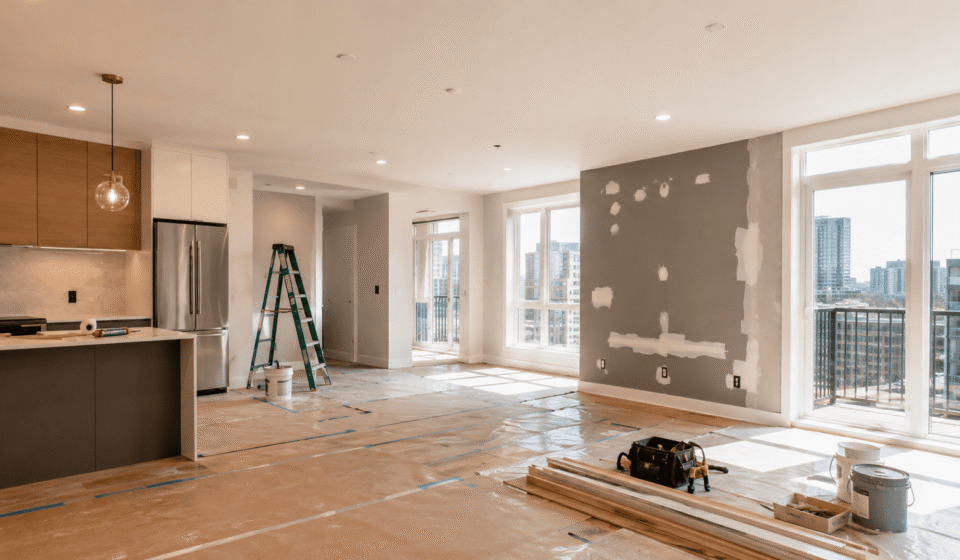

The Condo and apartment renovation cost in 2026 runs $15,000 to $90,000, per Angi, HomeAdvisor, and HomeGuide. Cost to renovate an apartment or how much to renovate a condo depends on the size of the unit and the extent of the work. A cosmetic update to a 1-bedroom unit runs $10,000 to $25,000. A full gut renovation of a 2-bedroom apartment remodel cost reaches $50,000 to $90,000 or more. HOA rules, building access restrictions, and limited working hours in residential buildings add cost and time compared to a standalone home.
Key Takeaways
- Condo and apartment renovations cost $15,000 to $90,000 on average in 2026, with most 1-bedroom updates running $15,000 to $30,000.
- HOA approval, building rules, and limited working hours are unique limitts that add cost and time not present in single-family renovations.
- Kitchens and bathrooms are still the biggest per-foot expenses, just as in a house, but confined spaces and logistics add complexity.
- Materials must often be hauled through shared building spaces, which adds time and sometimes requires material fees or elevator reservation.
- Wet walls and shared plumbing stacks limit where you can move fixtures, which limits layout changes and drives up cost.
- Budget 15% to 20% contingency and plan for HOA approval time before scheduling a contractor.
Table of Contents
- Average Cost and Price Ranges
- Cost by Unit Size and Scope
- Unique Condo Renovation Challenges
- HOA Rules and Building Restrictions
- Kitchen and Bathroom Costs in a Condo
- What Drives Condo Renovation Cost Higher
- How to Budget and Plan
- Frequently Asked Questions
- Final Word
Average Cost and Price Ranges
Condo and apartment renovation costs run $15,000 to $90,000 in 2026 for most projects, with a wide range driven by unit size, scope, and location. A cosmetic update to a 1-bedroom unit with new flooring, paint, and fixture updates typically runs $10,000 to $25,000. A full kitchen-and-bath renovation of a 2-bedroom condo lands around $40,000 to $70,000. A complete gut renovation reaches $60,000 to $90,000 or more.
The per-square-foot cost for a condo renovation runs 10% to 30% above a comparable house renovation. The reason is the logistics of working in a shared building. Material delivery, building elevator fees, restricted work hours, and the need to protect common areas all add cost that a standalone house renovation avoids.
Here is an overview of typical costs by project scope:
| Project Scope | 1-Bedroom Unit | 2-Bedroom Unit |
| Cosmetic refresh | $10,000 to $20,000 | $15,000 to $28,000 |
| Kitchen + bath update | $20,000 to $40,000 | $30,000 to $55,000 |
| Full renovation | $35,000 to $60,000 | $50,000 to $90,000 |
| Luxury gut renovation | $60,000 to $100,000+ | $80,000 to $150,000+ |
For the broader context of how much does a home renovation cost, see our pillar on how much a home renovation costs. For how location shifts these numbers, see our guide on renovation cost by region.
Cost by Unit Size and Scope
A worked budget example for a 750 square foot 1-bedroom condo getting a mid-range renovation:
| Item | Estimated Cost |
| Kitchen remodel (semi-custom cabinets, quartz counters) | $18,000 |
| Bathroom remodel (tile, new fixtures, vanity) | $9,500 |
| LVP flooring throughout | $3,800 |
| Painting (all rooms) | $1,200 |
| New light fixtures | $1,500 |
| Building permits fees | $1,200 |
| Elevator/materials handling fees | $600 |
| Contractor premium (building logistics) | $2,500 |
| Subtotal | $38,300 |
| Contingency (15%) | $5,745 |
| Total | $44,045 |
This 750 square foot unit at $44,000 works out to about $59 per square foot, somewhat above the typical $40 to $50 per square foot for comparable scope in a house, reflecting the building logistics premium.
Unique Condo Renovation Challenges
Renovating a condo or apartment is quite different from renovating a standalone home. A condo renovation has extra costs and challenges that a house renovation does not:
Limited working hours: Most residential buildings restrict contractor work hours to protect other residents, typically 8 AM to 5 PM on weekdays. This limits crew productivity and extends the project timeline compared to a house where work can proceed more freely.
Material handling and delivery: In a multi-story building, materials must be hauled through lobbies, hallways, and elevators. Some buildings charge fees for elevator reservations and require padding or floor protection throughout the common areas. These logistics slow the work and add cost.
Noise and dust control: Neighbors in adjacent units are directly affected by renovation noise and dust. Buildings often require dust barriers at the unit entrance, sealed HVAC vents during demolition, and advance notice to neighbors before noisy work begins.
Shared building systems: Plumbing in condos runs through shared stacks serving multiple units. Moving fixtures away from existing plumbing locations is difficult or impossible without affecting shared systems. This limits layout changes and drives up the cost of any plumbing moves.
Waste removal: Demolition debris must be staged, often in small quantities, and removed in ways that comply with building rules. Large dumpsters in a building parking structure are not always allowed, so contractors use smaller containers or staged haul-away, which costs more.
HOA Rules and Building Restrictions
HOA approval is a critical step in any condo renovation, and skipping it can result in fines, forced removal of completed work, or both. Most HOAs require a renovation plan to be submitted and approved before work begins, which can take weeks to months depending on the building’s review process.
HOA rules on flooring are one of the most common restrictions. Many buildings require a sound dampening underlayment beneath hard flooring to protect neighbors below. Some buildings prohibit certain types of flooring, like solid hardwood, in upper-floor units entirely. HVAC modifications, wet wall locations, and changes to the unit’s footprint are also often restricted.
Build the HOA approval timeline into your project plan from the start. Submit your renovation plans early, get written approval before signing a contractor, and keep a copy of the approval on file throughout the project. Contractors who regularly work in the building will know its rules and can help you avoid scope that requires variances or extended reviews.
Kitchen and Bathroom Costs in a Condo
Kitchen and bathroom renovations in a condo cost roughly the same in materials as in a house, but logistics and building limitts add 10% to 20% to the labor and overall cost.
Kitchen renovation in a condo: Expect $15,000 to $45,000 for a mid-range to high-end kitchen remodel in a condo. The same cabinet, countertop, and appliance choices apply here. Drywall, tile, and fixture grades follow the same scope of work logic as a house renovation. The added cost comes from the delivery logistics and the limits on layout changes if moving the sink or range requires relocating a shared stack.
Bathroom renovation in a condo: Expect $8,000 to $20,000 for a standard condo bathroom remodel. Wet wall limitts are most limiting here: the shared plumbing stack usually runs along one wall of the bathroom, and moving fixtures to a different wall requires penetrating the slab, which is expensive and sometimes not permitted by the HOA.
The table below shows how condo kitchen and bath costs compare to equivalent house renovations:
| Room | House Renovation | Condo Premium | Condo Total |
| Mid-range kitchen | $25,000 to $45,000 | +10% to 20% | $27,500 to $54,000 |
| Standard bathroom | $8,000 to $18,000 | +10% to 20% | $8,800 to $21,600 |
| Primary bath | $15,000 to $30,000 | +10% to 20% | $16,500 to $36,000 |
What Drives Condo Renovation Cost Higher
Several factors make condo renovation cost per square foot higher than standalone home renovation:
Building logistics premium: The material handling, limited hours, elevator fees, and protection requirements all add 10% to 30% to labor costs versus working in a house.
Location: Condos are heavily concentrated in high-cost urban markets. A condo renovation in Manhattan or San Francisco carries the same regional premium that any renovation does in those markets. Our guide on renovation cost by region covers the full scope of geographic variation.
Plumbing limitts: Moving a kitchen sink or bathroom fixture is much more expensive in a condo because of shared stack limitations. Where a house allows repositioning plumbing relatively freely, a condo often cannot.
Timeline extension: Limited working hours stretch project timelines. A renovation that would take 4 weeks in a house often takes 6 to 8 weeks in a condo, which means higher contractor overhead and longer periods of living disruption.
HOA compliance: Work that does not comply with HOA rules must be corrected or removed, at the homeowner’s expense. A contractor who does not know the building’s specific rules can accidentally trigger costly change orders.
How to Budget and Plan
Start your condo renovation budget by accounting for the building-specific costs before you price the actual renovation. Get written confirmation of the HOA’s renovation rules, fee schedule for elevator use and materials, and approved work hours. Confirm whether the flooring you want is permitted and whether any plumbing changes you are planning are allowed.
Then get three bids from contractors with experience in the specific building or in similar condo renovations in your city. Contractors who know a building’s rules and work order of inspections work faster. Publications like Remodeling magazine note this familiarity is especially valuable in condo renovations. Ask the building manager for a list of approved contractors if one exists. Compare bids on scope and line items using our guide on how to read a contractor estimate.
Budget a 15% to 20% contingency for the shared-system surprises that condo renovations reveal. Corroded copper behind tile, wet wall locations that differ from the drawings, and subfloor damage from past leaks above are all common finds. These are the hidden costs of hiring a contractor in a condo context. For financing, our guide on contractor financing options covers home equity loans and personal loans, both of which are commonly used for condo renovations since condo owners may have limited HELOC eligibility depending on their building type.
Frequently Asked Questions
How much does it cost to renovate a condo?
Condo renovations cost $15,000 to $90,000 in 2026 depending on the unit size and scope. A cosmetic update to a 1-bedroom unit runs $10,000 to $25,000. A full kitchen-and-bath renovation of a 2-bedroom condo lands around $40,000 to $70,000. A complete gut renovation can reach $60,000 to $90,000 or more.
Is renovating a condo more expensive than a house?
Usually yes, by 10% to 30% per square foot. Building logistics like limited working hours, elevator fees, and material handling add labor cost. Plumbing stack limitts in shared buildings make layout changes more expensive, especially when copper pipe behind tile cannot be moved. Location also plays a role, since condos are concentrated in higher-cost urban markets.
Do I need HOA approval to renovate my condo?
Yes, in virtually all cases. Most HOAs require written approval of renovation plans before work begins. Review cycles can take weeks to months. Skipping approval risks fines or forced removal of completed work. Submit your plans early, get written approval, and keep it on file for the duration of the project.
What are the biggest renovation challenges in a condo?
Limited working hours, material handling through shared building spaces, shared plumbing stacks that restrict fixture moves, HOA rules on flooring and scope, and noise and dust management for neighbors. These all add regional variation in how projects are scheduled and priced, on top of the cost differences a standalone house avoids.
How long does a condo renovation take?
A cosmetic condo renovation typically takes 4 to 8 weeks, compared to 2 to 4 weeks for the same scope in a house. Limited working hours extend every project. A full kitchen-and-bath renovation of a condo takes 8 to 14 weeks. A complete gut renovation can take 3 to 6 months.
What condo renovation adds the most value?
Kitchen and bathroom updates consistently add the most value in condos, as they do in standalone homes. In condos specifically, modern flooring, updated lighting, and an open plan feel if walls allow, also deliver strong return on investment and resale value. Updates that bring an older unit up to the standard of comparable units in the building or neighborhood return the most at resale.
Final Word
Condo and apartment renovation costs run $15,000 to $90,000 in 2026, with building logistics, HOA rules, and plumbing limitts adding 10% to 30% above comparable house renovation costs. A cosmetic 1-bedroom update costs $10,000 to $25,000, while a full gut renovation of a 2-bedroom unit can reach $60,000 to $90,000 or more.
Plan carefully before starting. Get HOA approval in writing. Confirm work hour restrictions and material handling fees. Check that your flooring and plumbing changes are permitted. Hire a contractor who knows your building type. Budget a 15% to 20% contingency, get three detailed bids, and account for the extended timeline that condo work requires. For related reading, see our guides on kitchen and bath renovation cost, renovation cost per square foot, and the pillar on how much a home renovation costs.