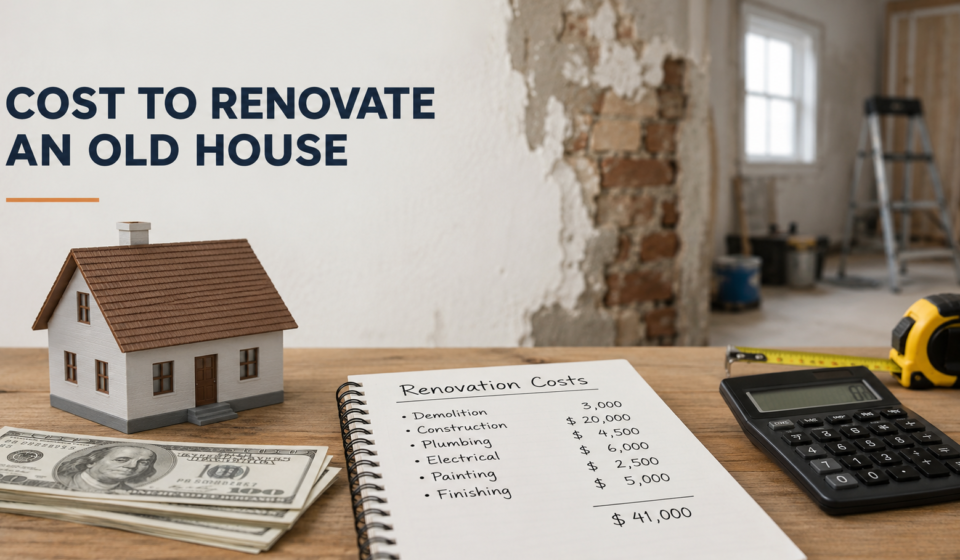

The cost to renovate an old house is more than a comparable newer home because of hidden issues like knob-and-tube wiring, cast iron plumbing, lead paint, and asbestos. Expect $15 to $150 or more per square foot, with historic homes running higher. Budget a larger contingency of 20% or more, since older homes routinely reveal surprises once demolition begins.
Key Takeaways
- Old houses cost more to renovate than newer ones because of outdated systems and hazardous materials hiding behind the walls.
- Common old-home costs include rewiring knob-and-tube or aluminum wiring, replacing cast iron or galvanized plumbing, and removing lead paint or asbestos.
- Homes built before 1978 trigger EPA lead-safe work rules, which add cost and time to any project disturbing paint.
- Mold cleanup runs $1,200 to $3,750 and asbestos removal $1,200 to $3,300, on top of the visible renovation.
- A standard 10% contingency is often not enough for an old house, so budget 20% or more.
- The charm, character, and solid construction of an old home can make the extra cost well worth it.
Table of Contents
- Why Old Houses Cost More to Renovate
- Average Cost and Per Square Foot
- Outdated Wiring and Electrical
- Old Plumbing and Systems
- Lead, Asbestos, and Hazardous Materials
- Structural and Foundation Surprises
- Historic Homes and Period Details
- How to Budget for an Old House Renovation
- Frequently Asked Questions
- Final Word
Why Old Houses Cost More to Renovate
The cost to renovate an older home almost always runs higher than the same work on a newer one, and the reason is what hides behind the walls. Older home renovation carries a hidden layer that newer homes skip. Decades of aging, outdated building practices, and deferred maintenance leave old homes with systems and materials that must be brought up to modern standards. A newer home rarely carries these burdens, so its renovation cost stays closer to the visible scope.
The extra cost is not padding, it is the reality of updating a building that was constructed to different codes with different materials. Wiring, plumbing, insulation, and even the paint may all need attention that a cosmetic budget never expected. And because so much of it is hidden, the full extent is not clear until demolition begins. These unforeseen conditions are the heart of the extra cost.
This is why old-house renovations carry the widest gap between the initial estimate and the final cost of any project type. Understanding the specific hidden costs ahead of time lets you budget realistically instead of being blindsided. This guide focuses on those age-related costs. If you are asking how much does a home renovation cost across every scenario, it builds on the full picture in our pillar on how much a home renovation costs.
Average Cost and Per Square Foot
The cost to renovate an old house spans a wide range, generally $15 to $150 or more per square foot, per cost guides like Angi. Historic and pre-1900 homes trend toward the top. The cost to remodel an old house depends heavily on its condition. The spread is even wider than for newer homes because the hidden issues vary so much from house to house. Two old homes of identical size can carry very different totals depending on the condition of their systems and structure.
The base renovation is the visible work: new kitchens, baths, flooring, and finishes. That part costs about the same in an old house as a new one, based on NAHB remodeling data. What drives an old-home budget higher is the layer of remediation and system replacement stacked on top. When you price an old-house project, treat the standard renovation cost as your starting point, then add generously for the age-related work this guide covers.
A simple way to think about it helps. Picture two budgets side by side. One is the renovation you can see: the kitchen, the baths, the floors, and the paint. The other is the repair work you cannot see: the wiring, the pipes, and the safety fixes. A new home mostly needs the first budget. An old home needs both. Planning for the second budget from the start is what keeps an old-house project on track.
Because the hidden costs are so significant, a per-square-foot figure is even less reliable for an old home than a new one. Use it only for the rough visible scope, and hold a large, separate reserve for the surprises. Our guide on renovation cost per square foot explains how to use the metric as a planning tool rather than a firm budget, which matters even more here.
Outdated Wiring and Electrical
Electrical is one of the most common and costly old-house upgrades. Homes built through the mid-20th century often have knob-and-tube wiring. Mid-century homes may have aluminum wiring. Both often fail modern code and can be a fire risk. Insurers increasingly refuse to cover homes with these systems, which makes replacement a practical necessity rather than an option.
Rewiring an old home is costly. It means running new wire through finished walls and adding a modern panel. You also make code upgrades to outlets, grounding, and circuits, a job HomeAdvisor notes is far cheaper during a gut. The work is far easier during a gut renovation, when the walls are already open. This is one reason major old-house projects often go deeper than owners first planned. Once you are opening walls anyway, updating the wiring is the efficient moment to do it.
Beyond the wiring itself, old homes rarely have enough electrical capacity for modern life. Adding circuits for a modern kitchen, HVAC, and today’s devices often requires a service upgrade. None of this shows in the finished look of the home, yet it is essential and it consumes real budget. Because it is concealed and easy to overlook, it belongs high on the list of costs our guide to the hidden costs of hiring a contractor covers.
Old Plumbing and Systems
Plumbing is the other big system that ages badly. Old homes often have cast iron drain lines or galvanized steel supply pipes, both of which corrode and clog over decades and frequently need full replacement. Galvanized pipes in particular restrict water flow as they corrode from the inside, and there is no fix short of replacing them. Like wiring, this work is far cheaper when walls are already open.
Heating, cooling, and insulation follow the same pattern. Many old homes have aging or undersized HVAC systems, or none of the ductwork a modern system needs, and adding it to a finished house is costly. Insulation is often minimal or absent in walls built before it was standard, so improving energy efficiency means opening walls or using specialized methods. These upgrades rarely add visible value, but they transform how a home feels and performs.
The theme across old-house systems is that everything is interconnected and concealed. Touching one system often reveals the need to update another, and none of it is visible until work begins. This is why old-house budgets need a large contingency. It is also why phasing or gutting decisions matter so much, as our guide on the cost to gut and remodel a house explores.
Lead, Asbestos, and Hazardous Materials
Older homes can contain hazardous materials that add both cost and legal requirements to a renovation. Lead paint is the most common. Homes built before 1978 are assumed to contain it, and federal EPA rules require contractors to follow certified lead-safe work practices when disturbing painted surfaces in these homes. That certification and the careful containment it requires add cost and time to any project touching old paint.
Asbestos is the other major concern. It was widely used in insulation, flooring, popcorn ceilings, and other materials through much of the 20th century, and disturbing it releases dangerous fibers. Asbestos must be removed by licensed professionals, and remediation typically runs $1,200 to $3,300 depending on the extent. Never attempt to remove suspected asbestos yourself, since improper handling creates a serious health hazard.
Mold is a third common find, especially where old homes have had water intrusion. Mold remediation averages around $2,230 and runs from about $1,200 to $3,750 depending on severity. All three, lead, asbestos, and mold, require professional handling. None were in your renovation vision, yet any of them can surface in an old home. Budgeting for the possibility is simply prudent when working with an older property.
Structural and Foundation Surprises
Beyond systems and hazards, old homes can hide structural issues that demolition reveals. Settling foundations, cracked or shifted framing, rotted subfloor or sills, termite or pest damage, and sagging beams all turn up in older properties. These are the surprises that most often cause a budget overrun, because structural repairs are both costly and not optional once found.
The challenge is that structural problems are usually invisible until walls, floors, or ceilings are opened. A home can look perfectly sound and still hide a compromised beam or a foundation that has settled over a century. This is why a thorough inspection before purchase or renovation is so valuable, though even the best inspection cannot see inside closed walls. Some discovery is inevitable with an old house.
A good pre-renovation inspection still pays for itself. It can flag active leaks, obvious settling, pest damage, and the age of the wiring and pipes before you commit. Ask the inspector to focus on the bones and the systems, not just the surfaces. You will not catch every surprise, but you will catch enough to plan with your eyes open.
When structural issues do appear, they take priority over everything cosmetic, since the home’s integrity comes first. This can reshape a budget mid-project, pushing planned finishes down the priority list until the bones are sound. A generous contingency and a flexible scope are your best defenses. Tying payments to verified milestones protects you as the work adapts, as our guide to the contractor payment schedule explains.
Historic Homes and Period Details
Truly historic homes carry their own cost layer beyond ordinary old houses. Preserving or replicating period details, original moldings, plaster walls, wood windows, and custom millwork, often requires specialty tradespeople and period-appropriate materials that cost more than modern equivalents. Matching a hundred-year-old profile or sourcing reclaimed materials is skilled, time-consuming work.
Historic districts add another dimension. Homes in designated historic areas may face preservation rules that restrict what you can change and require approved materials and methods for exterior work. These requirements protect character and value, but they narrow your options and can raise costs. Checking local historic regulations before planning is essential, since they can shape both the scope and the budget of your project.
Because of these factors, high-end and historic renovations often reach the luxury range of $250 to $600 or more per square foot. Yet many owners find the result worth every dollar. The craftsmanship, character, and solid construction of an old home are difficult to replicate in new construction, and a sensitive renovation preserves something a modern build cannot offer. For many, that is precisely why they chose an old house in the first place.
How to Budget for an Old House Renovation
Budgeting for an old house means planning for the invisible. Start with the visible renovation scope, estimated the way you would for any home, then add a dedicated allowance for age-related work: rewiring, replumbing, insulation, and possible remediation. Treat these not as maybes but as likely, since most old homes need at least some of them. Getting a thorough pre-renovation inspection helps you anticipate the biggest items.
The contingency is where old-house budgeting differs most. A standard 10% reserve is often not enough, so budget 20% or more of your total for the surprises an old home reliably delivers. On a $150,000 renovation, that is $30,000 or more held separately and untouched until a real discovery appears.
Put real numbers on it. Say the visible renovation of an old home is priced at $120,000. You then add $15,000 to rewire, $10,000 to replumb, and a possible $5,000 for asbestos or mold. On top of that sits a 20% contingency of about $30,000. Your realistic all-in budget is closer to $180,000 than $120,000. None of the extra is waste. It is what an old home needs to become safe, sound, and modern behind its walls. This larger cushion is the single most important habit for renovating an old house without a financial crisis mid-project.
Finally, choose your team and structure carefully. Hire a general contractor experienced with old homes, since they will anticipate problems a generalist might miss and know how to handle lead, asbestos, and outdated systems correctly. Get three detailed bids, tie payments to milestones, and sort out financing before you start. Our guides to contractor financing options and whole house renovation cost help you plan the money side. Done right, an old-house renovation rewards the extra effort with a home of real character.
Frequently Asked Questions
How much does it cost to renovate an old house?
Renovating an old house generally runs $15 to $150 or more per square foot, with historic and pre-1900 homes trending higher. The visible renovation costs about the same as a newer home, but age-related work, rewiring, replumbing, insulation, and remediation, stacks on top. Because these hidden costs vary so much house to house, old-home budgets carry a wide range.
Why is it more expensive to renovate an old house?
Old houses hide outdated systems and hazardous materials behind their walls. Knob-and-tube or aluminum wiring, corroded cast iron or galvanized plumbing, lead paint, asbestos, and structural issues all need attention that a cosmetic budget never expected. Much of it is invisible until demolition begins, which is why old-home renovations carry the widest gap between the initial estimate and the final cost.
What are the hidden costs of renovating an old house?
The main hidden costs are rewiring outdated or unsafe electrical, replacing corroded plumbing, adding or upgrading HVAC and insulation, and remediating hazards. Mold remediation runs $1,200 to $3,750 and asbestos removal $1,200 to $3,300. Lead paint in pre-1978 homes triggers EPA lead-safe work rules that add cost and time. Structural surprises like rot or foundation issues can add more.
Is it worth renovating an old house?
It often is, despite the higher cost. Old homes offer character, craftsmanship, and solid construction that are hard to replicate in new builds. Updating the systems makes them safe and efficient while preserving that charm. The key is budgeting realistically for the hidden costs and larger contingency upfront, so the extra expense is expected rather than a mid-project shock.
How much contingency should I budget for an old house?
Budget a contingency of 20% or more for an old house, higher than the 10% to 15% typical of newer homes. Old homes reliably reveal surprises like outdated wiring, corroded plumbing, hidden rot, or structural issues once demolition begins. On a $150,000 renovation, a 20% reserve is $30,000, kept separate and untouched until a genuine discovery appears during the work.
Do I need special permits to renovate an old house?
Often yes. Renovating an old house may involve permits for electrical, plumbing, and structural work, plus compliance with EPA lead-safe rules for pre-1978 homes. Homes in designated historic districts can face additional preservation requirements that restrict changes and specify approved materials. Checking local building and historic regulations before you plan is essential, since they can shape both scope and budget.
Final Word
The cost to renovate an old house runs higher than a comparable newer home, generally $15 to $150 or more per square foot, because of what hides behind the walls. Outdated knob-and-tube or aluminum wiring, corroded cast iron or galvanized plumbing, lead paint, asbestos, mold, and structural surprises all add cost and time no cosmetic budget anticipates. Historic homes with period details and preservation rules climb into the luxury range.
The way to renovate an old house well is to plan for the invisible. Start with the visible scope, add a dedicated allowance for age-related systems and possible remediation, and budget a contingency of 20% or more rather than the usual 10%. Hire a contractor experienced with old homes, get a thorough inspection, and tie payments to milestones. Do that, and the extra cost becomes a manageable, expected part of preserving a home with character that new construction simply cannot match. For related numbers, see our guides on the cost to gut and remodel a house, renovation cost per square foot, and the pillar on how much a home renovation costs.